
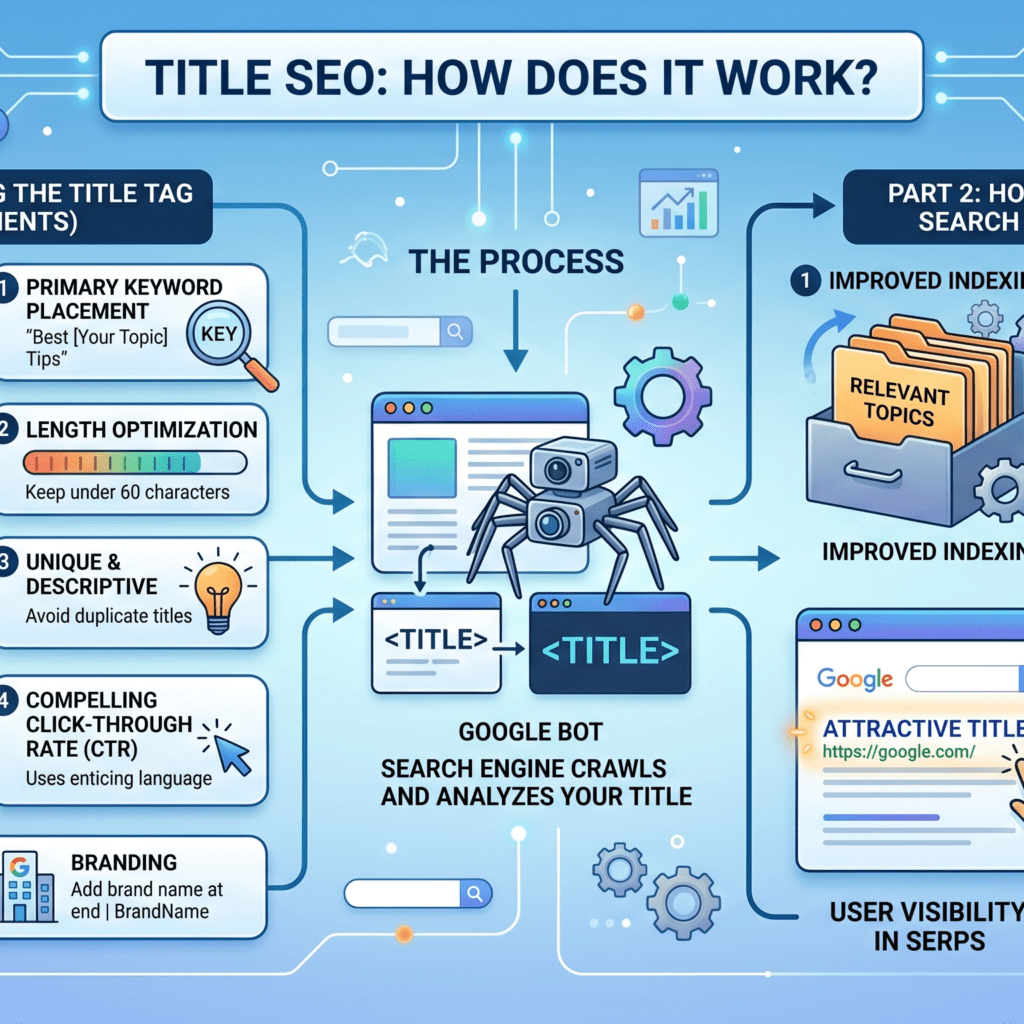
SEO stands for Search Engine Optimization. It is a process that helps websites rank higher on search engines like Google and Bing. SEO helps people find a website more easily online.
Today, millions of websites compete for attention. Most users click on the first few search results only. Because of this, businesses and website owners use SEO to improve their rankings.
Good SEO brings more visitors to a website. It also helps businesses grow online without spending money on ads all the time.
Why SEO is Important
SEO helps websites get free traffic from search engines. People call this organic traffic.
Here are some important benefits of SEO:
- Increases website traffic
- Improves online visibility
- Builds trust with users
- Helps businesses get more customers
- Improves user experience
- Supports long-term growth
A website with strong SEO can attract visitors every day.
How Search Engines Work
Search engines follow three main steps to show results.
1. Crawling
Search engines use bots to scan websites on the internet. These bots read pages and collect information.
When you publish a new page, search engine bots try to find it.
2. Indexing
After scanning a page, search engines store the information in a database. This process is called indexing.
If search engines do not index a page, users cannot find it in search results.
3. Ranking
When someone searches for something, the search engine checks its database. Then it shows the most useful pages first.
Search engines look at many factors before ranking a website. These factors include:
- Content quality
- Keywords
- Website speed
- Mobile friendliness
- Backlinks
- User experience
Websites that perform well in these areas usually rank higher.
Types of SEO
SEO has three main types.
1. On-Page SEO
On-page SEO focuses on the content and structure of a website.
It includes:
- Using the right keywords
- Writing useful content
- Creating clear headings
- Adding internal links
- Optimizing images
- Improving readability
Good on-page SEO helps search engines understand the content better.
2. Off-Page SEO
Off-page SEO focuses on activities outside the website.
The main goal is to build trust and authority.
Backlinks play a big role in off-page SEO. A backlink is a link from another website to your website.
Search engines see backlinks as a sign of trust.
Some common off-page SEO methods include:
- Guest posting
- Social media sharing
- Brand mentions
- Influencer marketing
Strong backlinks can improve rankings.
3. Technical SEO
Technical SEO improves the technical side of a website.
It helps search engines crawl and index the site easily.
Technical SEO includes:
- Improving website speed
- Making the website mobile-friendly
- Fixing broken links
- Using HTTPS security
- Creating XML sitemaps
A fast and smooth website gives users a better experience.
Importance of Keywords
Keywords are the words people type into search engines.
For example, someone may search for “best SEO tips” or “SEO for beginners.”
Websites use these keywords in their content to reach the right audience.
There are different types of keywords:
- Short keywords: “SEO”
- Long keywords: “best SEO tips for small businesses”
- Local keywords: “SEO company in Gurgaon”
Using the right keywords helps websites rank for relevant searches.
Why Content Matters in SEO
Content is one of the most important parts of SEO.
Search engines want to show useful and high-quality content to users.
Good content should:
- Answer user questions
- Use simple language
- Include keywords naturally
- Provide correct information
- Stay easy to read
Blogs, articles, videos, and guides can all improve SEO.
Fresh and useful content also keeps visitors on the website longer.
User Experience and SEO
User experience affects SEO directly.
People leave websites quickly if pages load slowly or look confusing.
Search engines track user behavior. They prefer websites that give users a good experience.
Good user experience includes:
- Fast loading speed
- Simple design
- Easy navigation
- Mobile-friendly pages
- Clear content
A user-friendly website can rank better in search results.
Benefits of SEO for Businesses
SEO helps businesses grow online in many ways.
Some major benefits include:
- More website visitors
- Better brand awareness
- Higher trust and credibility
- More leads and sales
- Lower marketing costs
- Long-term online growth
Businesses that invest in SEO can stay ahead of competitors.
Conclusion
SEO helps websites rank higher on search engines and attract more visitors. It improves website content, speed, structure, and authority.
Search engines use crawling, indexing, and ranking to show the best results to users. Websites that follow good SEO practices can gain better visibility and long-term success.
Today, SEO is an important part of digital marketing. Every business, blogger, and website owner can benefit from it.
To get more information or knowledge about DIGITAL MARKETING, PERFORMANCE MARKETING, SEO, and more, visit https://verduramarketing.com/